
Finder of Lost Children
A film by Ricardo Scipio — set in the Caribbean community of Canada
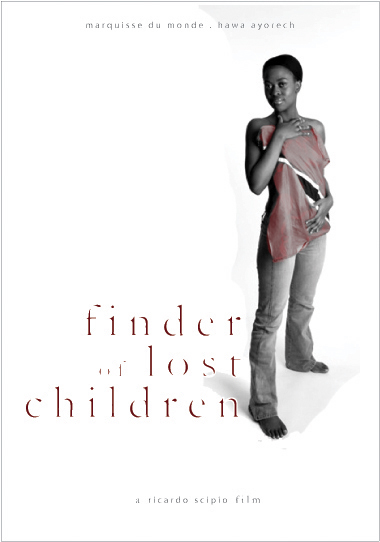
“Finder of Lost Children is the story of two half-sisters that meet for the first time at the funeral of the father neither one of them knew. These reluctant siblings make a road trip to deal with their father’s meager possessions and in so doing discover the existence of several other lost brothers and sisters who are unaware of their father’s passing. The two mismatched sisters decide to extend the road trip to find their brothers and sisters and along the way they discover the keys to their past and future through the secrets and lies that confront them — buoyed by the humour and humanity that is the irrepressible Caribbean spirit.”
For Thomas Richardson, a sixty-something West Indian immigrant who never grew-up , all the womanizing and boozing and coking up he’s done over the past 40 plus years has finally caught up with him and he dies penniless and alone. In his last moments of life he tells a nurse to send his body back to his ex-wife. But she , still consumed with a loathing for him doesn’t even want to deal with his remains and the responsibility falls on Maye Richardson the only child of
that unhappily brief union. Maye , always the dutiful and responsible one , quickly arranges a small funeral for the father she has only seen a few times since her mother ran away from his abuse when she was five. Throughout the day Maye seems unmoved by her father’s passing. Only when she gets safely behind the doors of her own house does she allow herself to show the fatigue of the experience. That private moment is disturbed by the incessant ringing of
her door bell. When she opens the door Angie Da Costa stands before her. A colourful looking wild-eyed woman who greets her loudly and plows into the house without an invitation. “I’m so-so sorry” she says. “I had to come all the way from Toronto and I almost didn’t find out”. When Maye asks her who she is , Angie replies , “You may not know me , but I know you.” Angie continues on the explain to an irritated Maye that she is her half-sister. Maye is in
utter disbelief. Angie continues on to say how sorry she is that she missed the funeral and that she figured they should at least meet. Maye doesn’t want anything to do with her and asks her to leave. On her way out Angie tells her what hotel she is at and tells her that someone should go and see about their father’s possessions and that if Maye didn’t want to do it then she would. The next day Maye calls Angie at her room and summons her back to her house. Maye is concerned that someone should see
about their father’s things , that it would be the only dignified thing to do and that since she had taken care of all the other arrangements it should be her that does that as well. Angie responds that there is nothing of value at their father’s small apartment but that since she never knew her father well but that since she was close to one of his other children (another half-sister)-who detested him and gave her the key to his apartment , that it should be her Angie who
took care of the possessions and that in doing so maybe she could learn more about who he was and why he lived the way he did. Maye is flabbergasted at the mention of another half-sister. And Angie tells her that they may be at least a dozen more half-siblings in 5 different provinces and that she has been using the internet and search companies to try to find them all. The sisters argue about it but agree to go and take care of their father’s possessions together. They spend a night
together at Maye’s immaculate suburban home before setting off to the town in which Thomas Richardson has lived his life in semi-secrecy. The two couldn’t be more different. Maye is well-mannered , dutiful , educated and very reserved. Angie is vivacious, self-possessed , loud , shameless , and uninhibited and uneducated with a booming laugh and is very much a Ghetto girl. The two go through their father’s meager possessions. Their first unified thought is “A life isn’t much”. Thomas
Richardson’s apartment doesn’t show him leaving much behind o record his passing on this earth. Some old records and photos , a dusty but sizable liquor collection. Old mis-matched furniture and many specialty catalogues of expensive and exclusive items. Some well-wishers and nosy neighbours drift by to provide some stories about Thomas , complaints and clues to his existence. Angie makes sure that she interrogates each one as much as she can , but it’s clear
that these people didn’t know all that much about this man. Maye asks Angie who her mother was. And Angie tells her the story of how she came to be. It seems that while Thomas was married to Maye’s mother he got drunk at a party and blacked out. Nine months later Angie’s mother came to the door holding up the baby. The realization of his guilt makes Thomas drink even more heavily than before and makes him an abusive and out of control Bastard. The first time he hits
Maye’s mother she escapes with her child and is on the run from him for the next several years. Thomas pulls out of town and pursues his wife and child so neither Angie or her mother see him again. Thomas eventually gives up on finding Maye and her mother and continues on the road drinking and womanizing. Later on in life , when Maye is 13 she finally does hear from Thomas and meets him the next year and sees him a few more times before his death. But despite his attempts to get close
to her there is no real bond between them. Angie convinces Maye to continue on their road trip for a couple more weeks to find some of their other half-siblings. They argue , they bond , they have adventures on the road. They meet several of their half-brother’s and sisters and find amazing similarities and differences. But one thing they all have in common is the hole left in their souls for not having and knowing their father. Some are successful some are
destitute. All the half-brother’s and sisters provide clues to their father’s life and travels. And Angie and Maye began to realize how funny, vivacious, unpredictable, talented and memorable their father was- how he had touched the lives of many people and sadly how lonely and desperate his life had become towards the end. Unexpectedly , the experience becomes too much for Maye who has a complete mental breakdown and violently attacks Angie
during a petty argument. Maye is hospitalized and when her records come from her town it is revealed that she has had a history of emotional problems. Angie is a loyal and steadfast bedside companion for Maye and virtually wills her back to stability. Angie drives the still-shaken Maye home and continues to care for her there. The two become completely close to each other and find a love for each other unexpressed during their odd-couple days before the
breakdown. The two sisters gather together the lost children of their father and they all together hold an uplifting and joyful memorial in celebration of Thomas Richardson.
Production Financing: Self-financed at C$14,000.
Production Shoot: 26-day shoot in and around Vancouver in the spring of 2007.
Technical: Shot on High-Definition by Director of Photography Paul Mercer Ellington; edited by William Shand.
Volunteer Ensemble: Produced with a passionate volunteer cast and crew. The Uncle Benjamin scenes with Wilbur Walrond were filmed at Mr. Walrond’s own home.
Companion Book: A book of gathered stories was planned during production — from the indieWIRE production report and his own Outside Child call.
Original Pan Score: The film features an original steel pan score composed and performed by Danish panist/composer Sune Borregaard.
The Call That Built the Film
synopsis Are you an “Outside Child”? Men and Women of West Indian origin wanted for fictional feature film set in the Caribbean community in Canada. If your father was one of those Caribbean men who had several or more Children with different mothers and failed to provide you with the emotional and/or financial support you needed, we’d like to hear your story. I am a Trinidad and Tobago born independent filmmaker doing research for my fictional film abut two half-sisters going on the road to find their lost half-brothers and sisters and I am also gathering your real stories for a book and website that is part of the film project. Please email nycfilmcanada at aol dotcom for more information on the project. Put “Outside Child” in the subject line. When emailing your query please indicate which Island your heritage is from and whether or not you were born in Canada or the Caribbean or elsewhere. regards Ricardo Scipio
Line Producer: Charlotte Mountford • Director of Photography: Paul Mercer Ellington
Editor: William Shand • 1st Assistant Director: Larry Piché
Production Designer: Lisa Zak • Sound: Brandon Manning
Costume Designer: Roger Williams • Script Supervisor: Janice Morrison
Casting: Charlotte Hansen & Tiffany Macrae
- 4th CaribbeanTales Film Festival, Toronto (July 12, 2009): Closing Night Film — Canadian Premiere.
- Hollywood Black Film Festival, Los Angeles: Screened Wednesday, June 3, 2009, 3:00 p.m. at the Laemmle theatre. As documented in Pan on the Net / When Steel Talks, LAist’s film calendar, and blackfilm.com’s festival coverage.
- bfm International Film Festival, London (2009): Official screening — the UK’s festival for Black world cinema. As announced in the bfm International Film Festival 2009 line-up.
- Zanzibar International Film Festival (ZIFF), Tanzania (2010): Official selection.
- XXVIIth Black International Cinema, Berlin (May 2012): Official selection.
- All three feature films by Ricardo Scipio played at the Black International Film Festival in Germany.